Whiskey glass types, compared
Five shapes, two jobs. Once you know which job you are buying for, the choice makes itself.
The honest note first: the search data we work from carries no measured volume for this question, because the obvious head terms in this category are contaminated by a country song of the same name and we excluded them. This page exists because every serious gift guide covers glass shape and buyers clearly need the answer - not because a keyword tool told us to write it. That is the kind of thing we would rather say than hide.
The comparison
| Shape | What it does | Best for | Typical size |
|---|---|---|---|
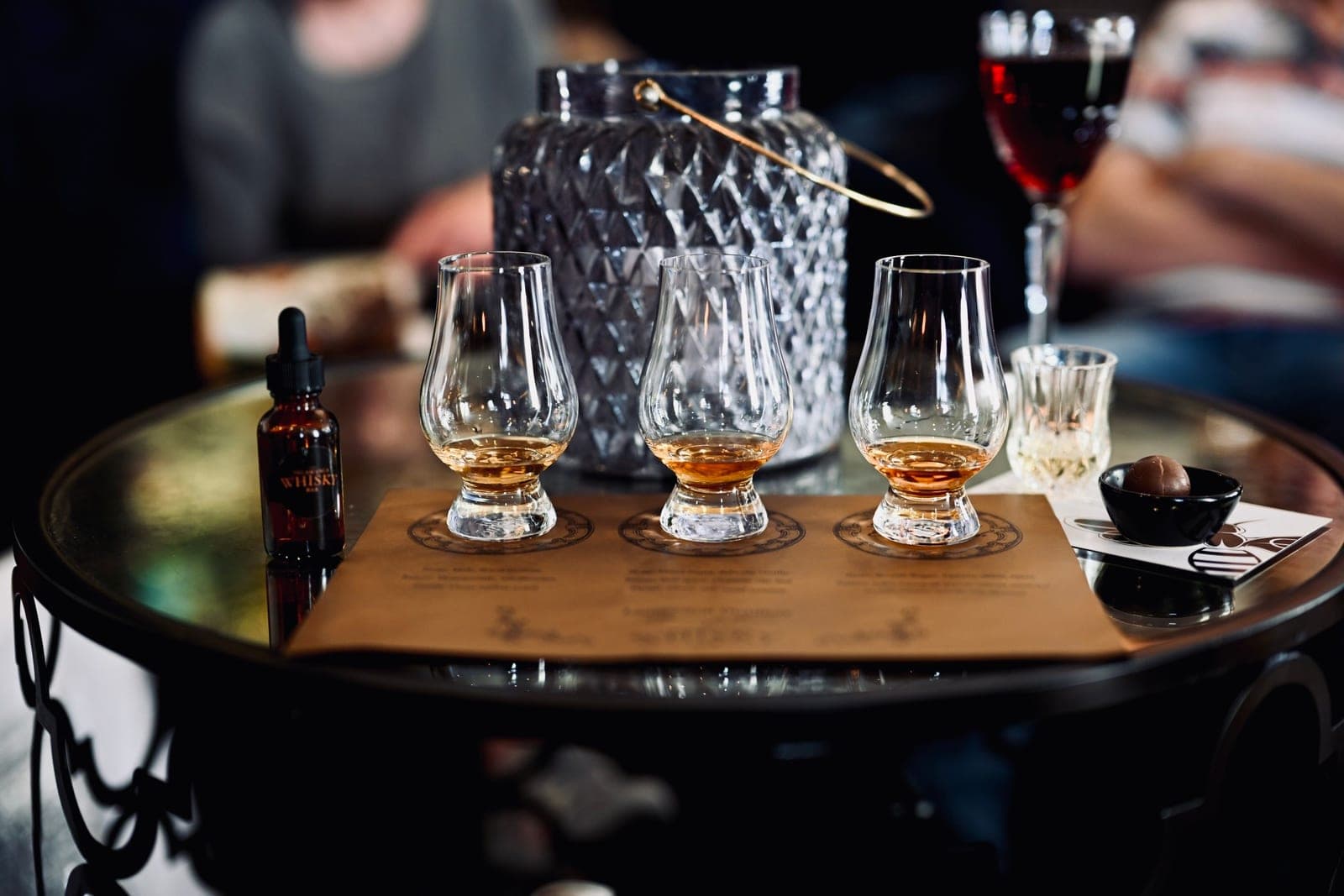
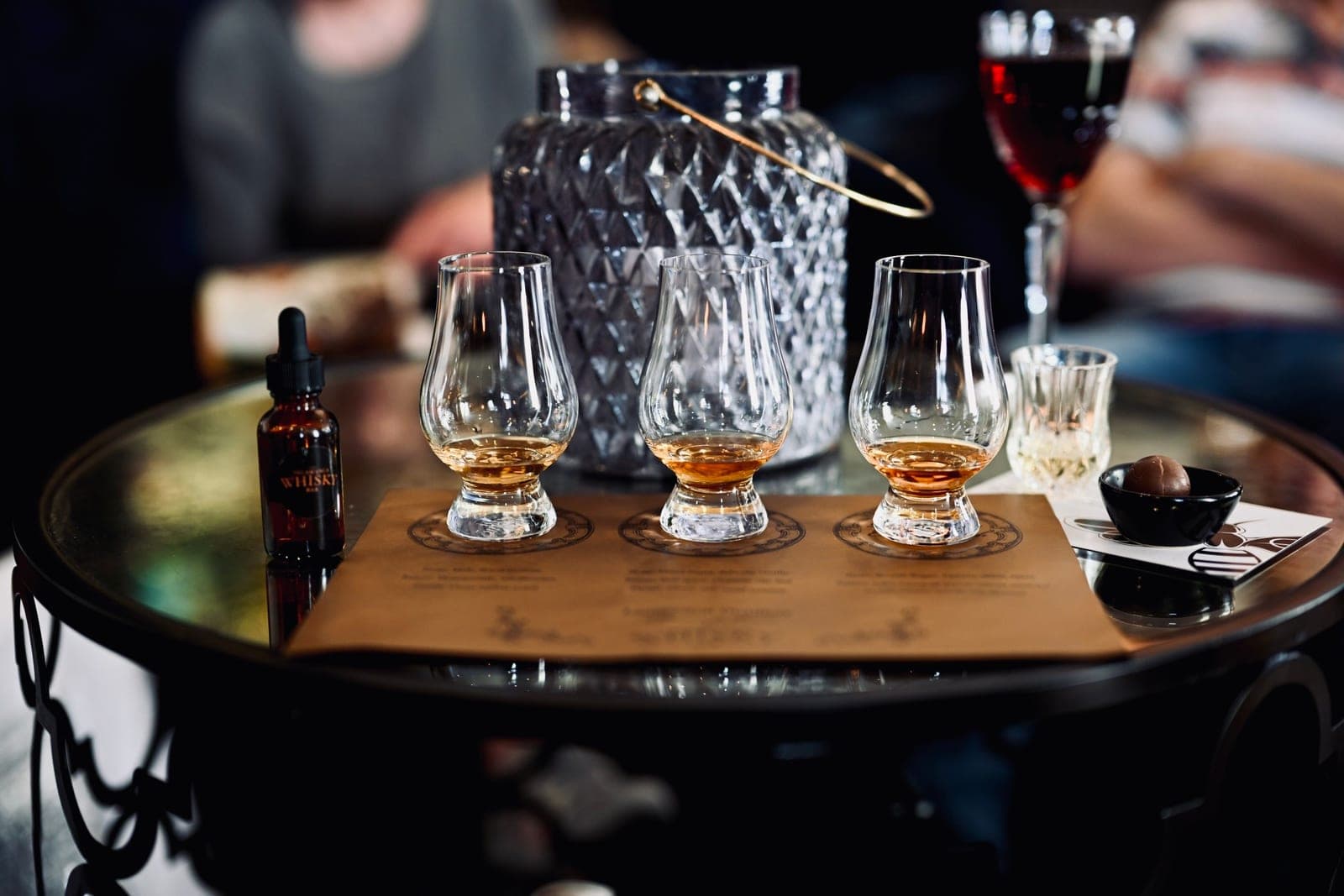
| Glencairn | Wide bowl, tapered mouth. Collects aroma and funnels it to the nose. The distillery tasting standard. | Tasting and comparing whiskey neat. | 6 to 7 oz |
| Copita / nosing glass | Similar taper on a stem. The stem keeps your hand off the bowl so body heat does not warm the spirit. | Long tastings, and anyone who notices their hand warming the glass. | 5 to 7 oz |
| Tulip | A bulb that narrows and then flares slightly at the lip. Concentrates aroma while softening the alcohol on the nose. | High-proof whiskey drunk neat. | 6 to 8 oz |
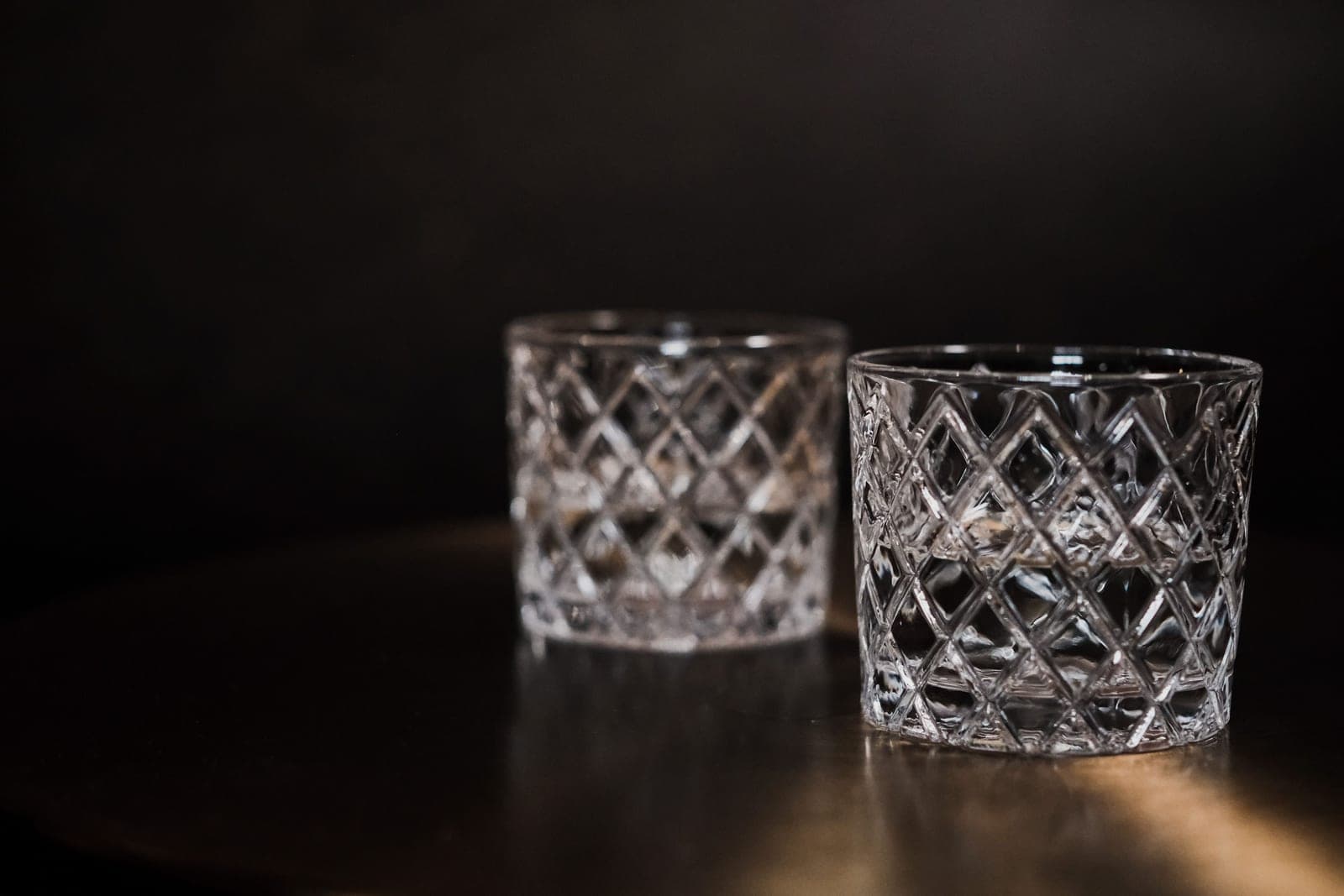
| Rocks / Old Fashioned | Straight sides, heavy base, wide mouth. Aroma disperses; there is room for a large cube. | Whiskey over ice, and cocktails. | 10 to 12 oz |
| Tumbler / highball | Tall and straight. Built for volume and mixers rather than for aroma. | Whiskey and soda, whiskey and ginger. | 12 oz and up |
Why the taper works
Aromatic compounds evaporate off the surface of the whiskey and rise. In a wide, straight-sided glass they spread out and dissipate into the room before they reach you. In a glass whose mouth is narrower than its bowl, they are funneled into a smaller opening and arrive at your nose more concentrated.
Since most of what you experience as flavor comes through the nose rather than the tongue, that concentration is a genuine difference in the drink. It is also why a tapered glass can make a high-proof whiskey harsher: it concentrates the ethanol along with everything else, which is what the slight flare on a tulip lip is there to soften.
Why the rocks glass is not a worse glass
There is a certain kind of whiskey writing that treats the tumbler as a mistake. It is not. If a whiskey is being drunk cold over a large cube, aroma concentration is not what you are optimizing for - the cold is already suppressing the volatiles, and what you want instead is room for the ice, a heavy base that stays put, and a wide mouth to drink comfortably from.
A rocks glass is the correct tool for that job and a Glencairn is the wrong one: there is no room for a two-inch cube in a 6 oz nosing glass. Buying someone a tasting glass when they drink theirs on the rocks is the glassware equivalent of buying them whiskey stones.
What about the sculpted and novelty shapes?
Glasses with mountains, bullets or spheres molded into the base are rocks glasses with a decorative feature, and they should be judged as rocks glasses: capacity, weight, and whether a large cube fits. The sculpting adds visual interest and, in the freezable versions, some thermal mass. It does not change the aroma behavior, because the mouth is still wide.
They are, however, considerably better as gifts than plain tumblers, for the simple reason that they look like something chosen. That is a real consideration and our glassware picks reflect it.
For the skeptical version of this whole question - does any of this actually matter - see does the whiskey glass matter. For the practical buying guide, how to choose a whiskey glass. For the two shapes in depth, the Glencairn glass is the tasting standard and rocks glasses is the everyday tumbler - and the Norlan review covers the one design that tries to be both at once. Cut kiriko glasses are rocks glasses too, and Japanese whiskey glasses covers what is and is not genuine. The sculpted mountain glasses get the same treatment in the LIITON Peaks review. Wood is the one material this comparison leaves out, and wooden whiskey glasses explains why a charred cup belongs in a different category from every glass here. For the brand most often asked about by name, the Riedel review.
Common questions
What is a Glencairn glass for?
Tasting whiskey neat. Its wide bowl and tapered mouth concentrate aromatic compounds toward your nose, which is why it became the standard in distillery tasting rooms. It is not designed to hold ice.
Is a rocks glass or a Glencairn better?
Neither. They do different jobs: the Glencairn concentrates aroma for tasting neat, the rocks glass holds a large cube and drinks comfortably cold. Someone who drinks whiskey regularly usually wants one of each.
What is the difference between a tulip glass and a Glencairn?
Very little, functionally. Both taper to concentrate aroma. A tulip usually flares slightly at the lip, which softens the ethanol hit on the nose and makes it a little kinder with high-proof whiskey.
Do I need a stemmed nosing glass?
Only if you notice your hand warming the glass, which mostly happens during long tastings rather than over one drink. For most people a stemless Glencairn is the practical choice and it is far less fragile.
What size glass do I need for a large ice cube?
At least 11 oz, and 12 oz is more comfortable. A two-inch cube takes up a lot of a 10 oz glass, which leaves very little room for whiskey.
Sources
- FashionBeans - Best Gifts for Whiskey Lovers - retrieved 2026-09-02
- The Whiskey Shelf - Bourbon And Whiskey Gift Guide (Under $30 And $50) - retrieved 2026-09-02
Why there is nothing to buy on this page: This page compares shapes rather than products, so the picks would be arbitrary - the same shape is available at every price. The ranked glasses are on the glassware hub, one click away.
Read next
Whiskey glasses: the gift that actually changes the drink
The ranked glassware, from a fifteen-dollar nosing glass to a full crystal set, with what each listing actually publishes.
Does the whiskey glass actually matter?
The honest scope of the glass-shape effect: real, repeatable, and limited to whiskey drunk neat.
How to choose whiskey glasses
A short decision guide: shape, capacity, weight, set size and presentation, in the order that actually narrows the choice.
Whiskey glass gift sets
Boxed glassware sets ranked on what is in the box, what the glasses are, and how well the whole thing unwraps.
Whiskey ice molds
Large cube and sphere molds ranked - the honest alternative to whiskey stones, starting under ten dollars.
Whiskey gifts for beginners
The beginner shortlist: a nosing glass, a book with structure, and an honest list of what to skip.